Have you ever, in retrospect, found your life disconnected? Some incidents have no bearing on others at all. And some incidents, causing much anxiety at the time, turn out to be of no consequence. People come and go; sure, there are reasons for why that is, but the reasons seem trivial or incidental or strange. You’re one way in a particular environment or with particular people, but another when it’s someplace or someone else. In short, your life, upon reflection, seems like it is incoherent. Things don’t quite add up. The moments of significance are not the expected ones. There are more loose ends than there are not. All this isn’t necessarily alienating, but it certainly is puzzling.
What if you were to view your life through multiple lenses, focusing on one aspect each time, parenthesizing the rest? Would your life seem less confusing—and fuller?
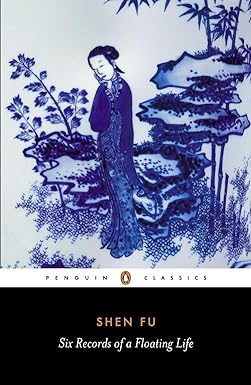
This is the narrative strategy that Shen Fu (1763-1825), a Qing Dynasty administrative clerk, employs to write his autobiography—by splitting it into 6 sections or 6 mini-memoirs, each based on a theme:
- The Joys of the Wedding Chamber
- The Pleasures of Leisure
- The Sorrows of Misfortune
- The Delights of Roaming Afar
But that’s only 4? Unfortunately, that’s the number of sections Shen Fu got to writing in his lifetime. An unfinished writing project; how relatable! Shen Fu began writing Six Records at forty six, and there is effectively no other source on his life, besides his own literary production.
The term “floating life” is an allusion to a poem by the paramount Tang dynasty poet Li Bai, titled “On a Banquet with my Cousins on a Spring Night in the Peach Garden”:
Now the heavens and earth are the hostels of creation; and time has seen a full hundred generations. Ah, this floating life, like a dream… True happiness is so rare!
As cited in Fu, p. 7
The poem, like Shen Fu’s autobiography, reflects on the ephemerality of existence and its joys. Nothing is rooted to the ground; everything will simply float away given sufficient time, leaving lightly, leaving no trace of itself behind.
If I were to propose idiosyncratically meaningful themes for sections of my own life, I might go with “The Joys of Meeting and Knowing Cute Animals” and “The Journey to Clean and Ethical Eating”. Perhaps also: “The Revelations of Reading”.
Six Records of a Floating Life is seen as a love story from the Western narratological perspective. In this way of looking at literature, a text has to abide by neat classifications. A text has to fall within one genre, two at most; three and you, the writer, are being real rowdy. And the text may have multiple themes, but one of them should pre-dominate; the rest should serve to illustrate that one master theme. For Rousseau’s Confessions, first published in 1782, a comparable work to Shen Fu’s in purpose and time period, that central theme is man as Nature made him. Rousseau promises, “I mean to present my fellow-mortals with a man in all his naturalness—and this man shall be myself.” (p. 13). An unsparing tell-all of how Nature made Rousseau is what the Confessions is.
Shen Fu’s narrative doesn’t follow a through line like this. It is beautifully written throughout, but the jump from section to section can be disconcerting. One set of emotions is replaced by another as swiftly as props are between scenes on stage. The tone not so much shifts as veers. What greater contrast can there be than the one between Part 2, “The Pleasure of Leisure”, and Part 3, “The Sorrows of Misfortune”? Perhaps the next jump to Part 4, “The Delights of Roaming Afar “, makes for a still greater contrast.
But there is coherence to all these sections. I think it is precisely because Shen Fu thematically compartmentalizes the different aspects of his life in writing about them, that we’re able to get a vibrantly complicated picture of who he was, how he lived, and the things and people he cared about.
If he had not, we might find in his narrative the untruthfulness of trying to make things fit where they really do not. Much of genre fiction, such as Romance, Mystery, Thrillers, etc., has always seemed labored or reductive to me because these works of fiction attempt to fit every detail of the story into the scheme of what the genre promises the reader. There is romance everywhere for the character in the Romance novel; every detail of their day has something to do with their paramour. There is suspense and creepiness and clues everywhere for the detective in the Mystery novel. There are bad intentions everywhere in the Thriller. These plot-advancing things do happen in real life—but not all at once, all the time.
Whereas with Shen Fu, it is a tapestry. Part 2 of his narrative reads like a pillow book, part 3 like a threnody, part 4 like a travelogue, and yes, of course, part 1 reads like a love story. And a touching love story it is, telling of how Shen Fu and his wife Yün met as children, being cousins, got to know each other; how the marriage was arranged, how well they got along, how sensitive they were to each other’s desires, moods, needs, and nuances of personality. Ultimately, tragedy would get in the way of their conjugal bliss. The tone of the entire book, however, isn’t predominantly tragic, like it is in part 3.
It isn’t as if when a person takes part in a leisurely activity, they leave behind all their woes. On the flip side, it isn’t as if when tragedy upends a life, everything becomes eternally tragic for that person. Life has to go on for the survivor. Closure will come. There are precious moments of reprieve. Everything may thereafter take on the tinge of tragedy, but the bereaved may still be able to find solace in something essentially unrelated to their grief, like noticing the beauty of a rustic setting as Shen Fu does.
The near-by countryside had fresh water and brilliant sand, and many plants of a deep red colour. The spring-fed stream for which the monastery was named flowed very quickly, and the whole area was thick with tall bamboo. Outside the cave was a square pavilion with a plaque reading ‘Carefree Pavilion’, and beside it were three ancient trees cracked like split coal, and with leaves that resembled those of the locust tree, only of a deeper colour. I do not know their name, but the local people called them ‘carefree trees’.
p. 143
By delineating these different timelines in his life according to theme, and by presenting them separately but in an intertwined way, Shen Fu shows a mature appreciative attitude towards the plenty of his own life. The darker shades may threaten to be too much to bear, but Shen Fu knows that his life has other colors. He just has to remember these other colors to know that he has lived; he has lost and grieved, but, certainly, he has also lived. He has understood and savored much of what life has to offer. Life is a cord, not a single thread.
The thing about living is, you can’t plot it along just one thematic timeline: not grief, not career, not the search for love, not the bonds of friendship, not the pursuit of money, not spirituality; maybe not even the pursuit of wonder. You give your attention to different things at different times; that might feel incoherent, but trust that these timelines do intertwine. Be on the lookout for jumping-off points that will take you to a different thematic thread; it’s a favor you can do yourself to know when it’s the right, well, time to switch timelines. The passage of time isn’t a one-dimensional affair, unless you see it as such; the generous use of different thematic lenses reveals a prismatic image of fulfillment, if not in all the time that has come to pass, then in the capacious days that will come to pass.
Works Cited
Fu, Shen. Six Records of a Floating Life. Trans. Leonard Pratt. New York: Penguin Group, 1983.
Rousseau, Jean Jacques. Confessions. Trans. S. W. Orson. Heritage Illustrated Press, 2014.
 Musings of an Educator, Writer, & Lifelong Learner
Leave a comment