Nota Bene: This post is littered with spoilers. Do NOT proceed if you wish to preserve the discussed text as terra incognita. Nabokov’s Pale Fire is also discussed in this post with arguable spoliation of its plot.
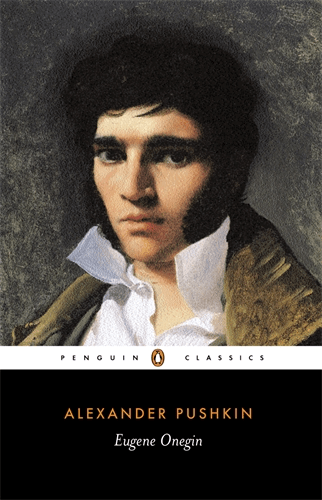
Alexander Pushkin’s (1799-1837) Eugene Onegin, first published in 1825, and serially through 1832, is a genre-bending work. Classified as a novel in verse, it has even established its own poetic form, the Onegin stanza, which is constituted by the use of iambic tetrameter and a sophisticated rhyme scheme juxtaposing both feminine rhyme (two syllables, with the first stressed and the end syllable unstressed) and masculine (only the end syllable).
Pushkin is widely known as Russia’s greatest poet, and Eugene Onegin, even when read in translation, bears out this acclamation. The first translation I read was Nabokov’s; a contingent of literary critics deprecated the translative approach used by the trilingual Nabokov (who wrote many novels in both Russian and English and also spoke French) as being too literalist. Edmund Wilson is one such critic; he was close friends with the writer until they fell out over Wilson’s fault-finding remarks. For my own penny’s worth, I found it helpful that Nabokov provided extensive fastidious footnotes explaining the poet’s original diction in Russian and other creative choices; Nabokov’s scholia permitted me to take a close look at the clever choices Pushkin made to exploit the peculiarity of certain Russian expressions for multiple meanings and lively connotations.
What I wish to focus my thoughts on, however, isn’t the poetic but the novelistic side of this creative work. Like its poetic structure, the narrative structure of Eugene Onegin is likewise an innovation. Patently, the text is about the titular character Eugene Onegin, whom the narrator calls the “hero of our novel” (p. 111); this refrain of calling the titular character “hero” recurs frequently throughout the narrative. Yet the narrative just as recurrently finds inventive ways of casting its titular character aside in favor of the narrator’s own preoccupations.
The plot proper goes something like this. Our hero Eugene Onegin is born into nobility. He is brought up to be modish, to rub shoulders with high society in St. Petersburg. Though possessed of no exceptional gifts or talents, he is charming and the upper crust approves of him. However, he grows bored of the charms and pleasures the monde has to offer. Just as well: his father, who was mistaken in his understanding and management of wealth, passes away, and creditors eat up all of his estate, but, soon after, Onegin’s uncle, who lives in the countryside, goes the way of his brother and bequeaths a country manor and its profitable purlieus to his nephew. Onegin goes to the country and is soon bored, having no need for a profession or a post, because of his newly begotten wealth. He strikes up a friendship with Vladimir Lensky, a neighboring landowner, who is an even younger man, and a poet. Lensky, poet that he is, has an all-consuming beloved in Olga, who resides, too, in the countryside with her family; he has loved her since childhood, but she rejected him at one point, and that only deepened his love for her and inaugurated his career as a brooding, solitude-seeking poet. Olga has an older sister, Tatyana, who, even before having met any potential match was planning to fall in love obsessively; she falls obsessively in love with Onegin upon meeting him. Onegin, saturated with ennui, spurns her, saying he’s not cut out for happiness or marriage. Tatyana’s deeply upset by this and broods over it. Lensky gets Onegin to turn up for Tatyana’s Name Day celebration by bluffing that it will be a small family affair. It really isn’t, extended family have been invited, and Onegin feels spiteful towards his friend for tricking him. He takes his revenge by seducing Olga, asking her to dance with him. She, being capricious and young, agrees though she is meant to be in love with Lensky. Lensky, witnessing this, asks to dance with her instead, and is deeply outraged to to bear the humiliation of having his true love proven false when she says she has to dance with Eugene first, as promised. Lensky challenges Onegin to a duel that ends with Onegin killing him. It’s a matter of regret; they were such good friends and Onegin, in retrospect, sees how his vindictiveness towards a close companion was unduly spiteful; Lensky’s offense was such a slight one. Olga, light in her feelings, does not remember her slain lover, and marries someone else soon enough. Tatyana, however, can’t let go of Onegin. One day, she asks to poke around in his manor while he’s out on a trip somewhere and discovers that Onegin is a hollow person, a pretender who has no real feelings, only affectations and literary models for his own personal identity, such as Byron’s Childe Harold, a figure whom the narrator frequently mentions to laud. Onegin is a man of fashion to the core. Tanya feels free at last from her feelings for Onegin. She agrees to a suitable match and is whisked away by her fiancé to the heart of Moscow high society. There, Onegin finds her again, but changed, much more cosmopolitan; he finds that now he does actually have feelings for her and, in a reversal of roles, pursues her, where before she was the pursuer and he the pursued.
You might assume a story as such, with its particular themes and plot twists, and because it is related through the medium of verse, to be narrated in grand Romantic style, like its progenitor Childe Harold, which is also a long narrative poem about a dubitable hero coping with ennui. The narrator, however, adopts another tact entirely. Not only is novelistic irony rife in Eugene Onegin, it can also seem like the narrator is standing on the podium of his mock-heroic tale to speak on entirely digressive subjects, namely, his own personality, his vocation as a poet, and his past.
The narrator repeatedly intrudes upon himself, in a variety of ways, as he lays out the plot of his narrative. More than once, the narrator begs leave of the reader to pick up the story at another time, saying he is too lost in personal reflections or creatively depleted to continue. At other times, with no prompting needed, the narrator abandons the plot and declaims generally on young love, the attenuation of passion and other feelings with age, and the difficult undertaking of composing poetry—and this is when he’s not talking directly about his own time spent in the high society of St. Petersburg or in the countryside. When the narrator returns to the plot, it is by making a show of responding to a presumed question from the reader about where the characters are and what they’re doing at this moment while the narrator has been holding forth. And all throughout, the narrator relates, with ambiguity and contradiction, what his personal connections are to the two principal characters of his tale, Onegin and Tatyana. Are they people he used to know or figments of his poetic imagination? He is in no hurry to stop the reader from speculating.
The narration, then, is reflexive because the narrator can’t stop making the narrative about himself, directly or indirectly, when he should, as the presumed personality of the reader would wish it, be focussing on what his characters are going through instead. It bears noticing that Nabokov, deeply fond and admiring of Pushkin and his masterpiece Eugene Onegin, is the author to give us the novel Pale Fire, wherein the first-person narrator, Charles Kinbote, tries to make out a masterful 999-line poem by the recently deceased John Shade—who, in the poem, is writing about his own experiences of love, beauty, mortality, and grief—to be a secret code for a self-serving topic: Kinbote’s highly dubitable backstory as a crown prince hailing from the allegedly real kingdom of Zembla, a crown prince who, after making a perilous escape, is in hiding for reasons of safety and considers his self-imposed exile with a high-toned sense of personal injury and loss.
The reflexive narration in Eugene Onegin gives us pause to consider what exactly makes up a narrative. Beyond plot and the dress of description, there is the narrator’s commentary; and commentary, subtly incorporated or distinctly marked off, can dominate a narrative. An indisputable observation that can be made is that the meaning of a narrative is shaped by the narrator’s commentary. Think of a morality tale; take your pick from any of the canonical texts of a monotheistic world religion. In those instances, the narrator takes a stance that is clearly hostile to certain types of behavior; these deeds get encoded by the narrator as sinful or debased. Without the narrator’s commentary, the reader might still be averse to the behavior depicted, but they wouldn’t be shunted towards forming the same judgments as the narrator’s own. And the function of commentary in a narrative becomes even more complicated when you think of how narrators could be ventriloquizing their own views through their characters; the implicit baseline assumption is that a narrator exists to represent the characters in their charge, not speak on their behalf while pretending not to.
We could say the narrative stance taken in Eugene Onegin is a highly unusual one; if we are to understand “narrative stance” as denoting the attitudes taken and judgments made by the narrator, concerning the subject, themes, and characters of the narrative; whereby even the selection of details itself, what to include or omit, is telling.
A narrative stance is essential; it functions much like how a rhetorical stance functions in an argument. As reasons themselves do not pointedly persuade without the help of rhetoric privileging said reasons through different types of appeals to the audience, plot itself cannot have a coherent message until it is plaited with the narrator’s commentary.
An explicit announcement of narrative stance can be found in either Homeric epic. The invocation of the gods in the Odyssey, to launch the epic, begins thus.
Tell me, Muse, of the man of many ways, who was driven far journeys, after he had sacked Troy’s sacred citadel. Many were they whose cities he saw, whose minds he learned of, many the pains he suffered in his spirit on the wide sea, struggling for his own life and the homecoming of his companions. Even so he could not save his companions, hard though he strove to; they were destroyed by their own wild recklessness, fools, who devoured the oxen of Helios, the Sun God, and he took away the day of their homecoming.
p. 27
Right off, the narrator reveals the reason Odysseus is the hero of the epic: he is crafty and knows many ways to get things done, and he learns from the peoples he encounters on his travels, unlike his foolish, reckless companions. The narrator privileges the qualities of intelligence and improvisational cunning, and the narrator-rhapsode, throughout his telling, finds much to admire in Odysseus, in accord with these qualities. The narrative is not a neutral surface on which the deeds of Odysseus are recorded. The deeds of Odysseus might well be interpreted as egotistical, but the narrator predisposes the audience to view the hero in the light of more admirable traits. The stance the narrator takes towards the hero is, to say the least, a favorable one. After all, “many the pains he suffered in his spirit on the wide sea”; never mind the pains suffered by his reckless, foolish companions; it is made plain who the sympathetic character is.
When we have looked this closely at what a narrative stance can do in the telling of a story, we might feel somewhat put off. Are narratives, in not insignificant ways, undercover sermons? Wouldn’t that throw the question of artistic merit into fundamental doubt and severe disarray? Are even novels undercover sermons? Is the craft of novel writing simply an accessory to the task of homiletics?
To partition off the independent artistic value of narratives, writers do deploy literary devices such as unreliable narrator and free indirect discourse. These devices destabilize the moral authority narrative stances presume for themselves. Pushkin has the vision to venture further; instead of just aligning the narrative stance in Eugene Onegin with artistic ends, he makes it a fit subject for the verse-novel to explore. To look at it from this meta-artistic perspective, the narrator’s reflexive digressions are critical components of the narrative rather than by-play; they layer and enrich the ways in which the narrative’s central themes—beauty, poetry, modishness, rusticity, youth, and love—are developed.
One particularly sophisticated way Pushkin uses the narrative stance of Eugene Onegin as a building block, rather than a mold, for his narrative is to frame the story of the plot, i.e. the story of Onegin et alia, as an allegory for how the narrator evolved with age, as a poet.
The archetypes that Onegin and Lensky embody are significant to our understanding of how the plot functions as an artistic allegory. The characters, realistic as they are in some ways, should also be thought of as archetypes in others. This straddling of literary realism and archetypal characterization is a device that falls in line with the generic hybridity of Eugene Onegin as a novel-in-verse. The narrator remarks on Onegin and Lensky’s blossoming friendship thus.
So, verse and prose, they came together.
No ice and flame, no stormy weather
and granite, were so far apart.
At first, disparity of heart
rendered them tedious to each other;
then liking grew, then every day
they met on horseback; quickly they
became like brother knit to brother.
Friendship, as I must own to you,
blooms when there’s nothing else to do. (2.XIII).
How the friendship of two bored, young landowners began in the countryside? Yes, of course. But we are also witnessing, through personification, the coming together of the craft of novel writing and the craft of composing poetry. To take the stanza allusively, the narrator can be understood as describing how he came to conceptualize the presently discussed novel-in-verse: he had time on his hands and found that the two linguistic arts were not as incompatible as he first believed, even if they are antithetical in a number of ways.
The narrator does also explicitly discuss why he chose to write in an invented, rather than established, poetic form.
In the spring of his youth, the narrator-poet fell deeply in love; but, not being Petrarch, who composed amorous verses to his beloved Laura while being in love with her, he was unable to compose poems on love while in it. The narrator answers the presumed reader’s question of who his poetry-inspiring paramour might be, by saying:
‘Whose glance, provoking inspiration,
rewards the music of your mind
with fond caress? whose adoration
is in your poetry enshrined?’
No one’s, I swear by God! in sadness
I suffered once from all the madness
of love’s anxiety. Blessed is he
who can combine it with the free
fever of rhyme: thereby he’s doubled
poetry’s sacred frenzy, made
a stride on Petrarch’s path, allayed
the pangs with which his heart was troubled,
and, with it, forced renown to come –
but I, in love, was dull and dumb. (1.LVIII).
In time, love begins to slacken its grip on the poet’s tortured soul; he stops doodling feminine figures and is able to write. However, remnants of his experience with love are felt; he is still in grief over having his heart broken, presumably from having his feelings unrequited. This being so, he finds it too overwhelming to compose an ode, a traditional poetic form, seeing as his experience with love has left traces of its “madness”, and it would be too much to bear this strain on top of the “sacred frenzy” needed to write poetry. The narrator does, however, have the emotional and mental wherewithal to write a novel-in-verse.
Love passed, the Muse appeared, the weather
of mind got clarity new-found;
now free, I once more weave together
emotion, thought, and magic sound;
I write, my heart has ceased its pining,
my thoughtless pen has stopped designing,
beside unfinished lines, a suite
of ladies’ heads, and ladies’ feet;
dead ash sets no more sparks a-flying;
I’m grieving still, but no more tears,
and soon, oh soon the storm’s arrears
will in my soul be hushed and dying.
That’s when I’ll sit down to compose
an ode in twenty-five cantos.

I’ve drawn a plan and a projection,
the hero’s name’s decided too.
Meanwhile my novel’s opening section
is finished, and I’ve looked it through
meticulously[...] (1.LIX-LX).
It is easy to understand why a novel-in-verse is less taxing on the psyche: it is a poetic form tempered with the cooling distance of novelistic irony. Less of poetry’s “sacred frenzy” would be required, making it just the right amount for the narrator, who harbors a residuum of love’s anxiety-stoked madness.
This artistic breakthrough of devising a hybrid genre comes at a good time. The narrator’s poetic powers have been on the wane; age has crept up on him. At the end of chapter 6, the narrator promises to persist with the plot at some other time, saying:
But not today. Although I dearly
value the hero of my tale,
though I’ll come back to him, yet clearly
to face him now I feel too frail...
The years incline to austere prosing,
they kill the zest of rhymed composing,
and with a sigh I now admit
I have to drag my feet to it.
My pen, as once, no longer hurries
to spoil loose paper by the ream;
another, a more chilling dream,
and other, more exacting worries,
in fashion’s din, at still of night,
disturb my spirit’s inward sight. (XLIII).
Anyone who has ever composed even a single line of verse knows that poetry is a young person’s exploit. With age, come more responsibilities; it becomes difficult to usher in poetry’s sacred frenzy, when you’ve got things like career, bureaucracy, or property on your mind. And, with age, strong emotions flag. The narrator-poet, his concerns turning away from youth’s intensities, finds himself drawn towards “austere prosing”. About to turn thirty, he knows not to expect poetic inspiration to come to him as easily as it did before. He reflects:
I’ve learnt the voice of new ambition,
I’ve learnt new sadness; but in this
the first will never find fruition,
the earlier griefs are what I miss.
O dreams, o dreams, where is your sweetness?
where (standard rhyme) are youth and fleetness?
Can it be true, their crown at last
has felt time’s desiccating blast?
Can it be true, and firmly stated
without an elegiac frill,
that spring with me has had its fill
(as I’ve so oft in jest related)?
Can it be true, it won’t come twice –
and I’ll be thirty in a trice? (6.XLIV).
Though enervated by age, by the emptying out of youthfulness, he must, nevertheless, finish his composition, so he calls upon the resources, in remainder, of his dreamy and passionate bygone youth.
Let me look back. Farewell, umbrageous
forests where my young age was passed
in indolence and in rampageous
passion and dreams of pensive cast.
But come, thou youthful inspiration,
come, trouble my imagination,
liven the drowsing of my heart,
fly to my corner like a dart,
let not the poet’s soul of passion
grow cold, and hard, and stiff as stock,
and finally be turned to rock,
amid the deadening joys of fashion
in that morass, I beg you note,
where we, dear friends, are all afloat! (6.XLVI).
We have given our attention to how the narrator-poet felt the encroachment of prosaicness as he got older. But how do Onegin and Lensky, as archetypes, speak to the narrator’s evolution as a poet? For one thing, Onegin is 26 years old, shortly after he killed Lensky, and Lensky is not yet 18, when he first meets Onegin (2.X, 8.XII). The age gap is a significant one; it is a chasm, where the strength of one’s poetic vigor is concerned, as we’ve heard from the narrator’s own statements on the subject. Onegin-the-superflous-man-as-prose kills Lensky-the-poet-as-poetry: this plot point is a conceit for the artistic threat the narrator-poet feels from the waning that age brings. His poetry, he fears, is turning more prosaic, might soon in fact turn into the stone of prose entirely. Lucky for him, he turns this petrification around by composing the presently discussed novel-in-verse, a hybrid form that generously rewards his poetic efforts.
When we read the plot of this narrative as an artistic allegory, we begin to see the four main characters—Onegin, Lensky, Tatyana, and Olga—in surer shapes. Certainly, the narrator himself has spent time in the city and countryside of St. Petersburg, so it is very likely that these characters are modelled after actual people he has met and known. That’s how we can understand the plot as the plot of a novel. Yet, what about understanding it as a plot in service of a conceit, what we have been calling “artistic allegory”? If you wish to tell the story of your personal journey as a poet, spanning many different social settings, what more vivid way to do it than to write a love story using archetypal characters, characters who have core traits that mirror the central themes that captivate you in your capacity as a poet?
It is possible to dichotomize the four central characters down the middle by a bright dividing line. On the side of the prosaic, we have Onegin, modish, rejecting conventional ideas of happiness, and saturated with ennui; and we have Olga, fleet in her feelings, happy to marry well for the sake of conventionality and societal approval. On the side of the poetic, we have Lensky, an unrequited lover, a brooding poet, serious in his feelings, a believer of true love, full of honor and noble feelings; and we have Tatyana, an unrequited lover, deep in her feelings, a brooding daydreamer about her beloved, a believer in the true self (hence her shock at discovering that Onegin is nothing more than the sum of his pretensions and affectations).
And note! There would be no conflict if the narrator marionetted the poetic man to pair with the poetic woman, and the prosaic with the prosaic! Lensky would pour out his long-abiding feelings to Tatyana; she would understand what he’s talking about, unlike her superficial sister Olga, because she too has been having obsessive thoughts of love, and they’re about her besotted confessor, joy of anguishing joys! So Tatyana and Lensky would end up together after many complicated feelings, and eventually marry. This would leave Onegin with Olga. He, unable to escape the weight of his tremendous ennui, wouldn’t pay her much attention—but she would hardly mind! She, unlike her sister, wouldn’t think to brood over him or come close to playing the part of an unrequited lover; she would be robustly content to flirt with and, eventually, marry someone else.
These archetypes and their struggles are almost a form of psychomachia, a battle of different artistic inclinations within the narrator-poet’s soul. That the narrative of Eugene Onegin is not ultimately about its plot but about the narrator-poet’s own struggles and remembrance of a former life is strongly indicated by the way the narrator breaks off abruptly towards the end of the narrative to leave it, without regret, on a cliffhanger. The thing is, we the readers were never meant to find out how Tatyana and Onegin’s love story concludes, because, at the bottom of it all, they’re literary archetypes meant to illustrate a number of intricate points about the narrator’s own poetic voyage over troubled waters, and once that’s accomplished, they may gracefully depart the page.
She went – and Eugene, all emotion,
stood thunder-struck. In what wild round
of tempests, in what raging ocean
his heart was plunged! A sudden sound,
the clink of rowels, met his hearing;
Tatyana’s husband, now appearing…
But from the hero of my tale,
just at this crisis of his gale,
reader, we must be separating,
for long… for evermore. We’ve chased
him far enough through wild and waste.
Hurrah! let’s start congratulating
ourselves on our landfall. It’s true,
our vessel’s long been overdue. (8.XLVIII)
We need not worry about how things will eventually turn out for these two star-crossed lovers. It was through a mist of imagination that the figures of Onegin and Tatyana came to the narrator, the same mist that begets dreams. If anything, they will turn back from the vanishing point of the novel, as seen from the narrator’s perspective, and resume their volatile relationship on the other side of that veil of mist.
And my companion, so mysterious,
goodbye to you, my true Ideal,
my task, so vivid and so serious
and yet so light. All that is real
and enviable for a poet,
in your pursuit I’ve come to know it
oblivion of life’s stormy ways,
sweet talk with friends. How many days
since, through the mist that dreams arise on,
young Tanya first appeared to me,
Onegin too – and I could see
to my free novel’s far horizon,
still dim, through crystal’s magic glass,
before my gaze began to pass. (8.L).
What the narrator feels connected to, in the first instant, is the task of composition itself; it glimmers to him as an ideal to be realized, and a companionable one. It is through the task that the poet feels connected to his characters. He understands that his characters, being archetypes, exist firmly only within the context of his own poetic struggles and past, and that context crystallized is the completed task of composition.
This peculiar sense of companionship is not because the narrator favors abstract forms of human relationships; the composition, after all, recalls for him “sweet talk with friends”. Though Tatyana and Onegin are dreamlike figures of the narrator’s imagination, they are not, as such, cut off from the narrator’s lived reality. They are, indeed, reminiscent of it, of good times spent with close friends, times long gone. We should remember that dreams and reality used to be more closely allied. People of antiquity believed that dreams were prophetic. In the narrator’s case, the reality of dreams goes in the other direction, towards the irrecoverable past.
The narrator of Eugene Onegin is not an exemplary figure of a self-obsessed poet who takes up a meta-artistic composition in order to exult in his own virtuosity. Instead, the narrator is someone who wishes to express the simple truth that poetry, as an undertaking, has always been personal to him. Real people are not less real to the narrator, compared to how non-poets view real people; they are just more poetic. If Tatyana and Eugene and the rest of the dramatis personae are dream-figures in the scheme of the narrator’s poetics, it does not mean that they possess only the ideality of poetic form. They should be taken as composite figures of the people in real life who have left a lasting impression on the narrator; and, beyond being partial mirrors of real people, they are emblematic of all the wonderful moments the narrator has spent socializing, such moments that have whisked him away from the burdensome cares of existence, such “sweet talk with friends” as to provide a harbor against “life’s stormy ways.”
The narrator’s novel-in-verse is his tribute to wonderful times past. He concludes his composition tellingly, with tempered jollity.
Of those who heard my opening pages
in friendly gatherings where I read,
as Sadi sang in earlier ages,
‘some are far distant, some are dead’.
They’ve missed Eugene’s completed etching.
But she who modelled for the sketching
of Tanya’s image… Ah, how great
the toll of those borne off by fate!
Blest he who’s left the hurly-burly
of life’s repast betimes, nor sought
to drain its goblet down, nor thought
of finishing its book, but early
has wished it an abrupt goodbye –
as, with my Eugene, so have I. (8.LI).
That the narrator breaks off, that the narrator does not conclude the plot—can anything be truer to life than an unfinished story? Though literary realism dictates to the novelist that significant actions must meet with significant consequences so the reader is able to understand what society is truly like, Pushkin’s narrator opts for another kind of realism: a willfully incomplete story, a willfully incomplete understanding of human affairs, the taking leave of a life situation and never being able to return to it—except in memory. To the narrator, people who know to depart when not all has been said and done are blessed; they leave something fond for nostalgia to turn over ceaselessly, gaps for poets to fill in with pining dream visions. Better it be this way than to be “borne off by fate”, the thought that you haven’t done enough with your life weighing heavy on your mind.
Pushkin’s innovations of narrative structure in Eugene Onegin are not adornments or winking displays of ingenuity. They lie at the very heart of the story, a story that is, on the final analysis, not about the plot, but about an aging poet’s meditations on irrecoverable happy times and on his devotion and gratitude to an art form that has served as friendly inspiration, through all those years.
I have more to say on the subject of this text’s brilliance, but taking my cue from Pushkin’s narrator, I’ll hold off and leave you with well-wishes from the narrator himself, whose words will fill in for my own valediction.
Reader, I wish that, as we parted –
whoever you may be, a friend,
a foe – our mood should be warm-hearted.
Goodbye, for now we make an end.
Whatever in this rough confection
you sought – tumultuous recollection,
a rest from toil and all its aches,
or just grammatical mistakes,
a vivid brush, a witty rattle –
God grant that from this little book
for heart’s delight, or fun, you took,
for dreams, or journalistic battle,
God grant you took at least a grain.
On this we’ll part; goodbye again! (8.XLIX).
Works Cited
Homer. The Odyssey. Trans. Richard Lattimore. New York: HarperCollins Publisher, 1967. Kindle Digital.
Pushkin, Alexander. Eugene Onegin. Trans. Charles Johnston. New York: Penguin Books, 2003. Kindle Digital.
 Musings of an Educator, Writer, & Lifelong Learner
Leave a comment