Nota Bene: This post is littered with spoilers. Do NOT proceed if you wish to preserve the discussed text as terra incognita.
Reality’s a funny thing to find. You’d think it’s all around us, simply just there for the noticing and experiencing. But reality has often eluded those who have given it the most thought, that is, philosophers of just about every stripe. It seems that to theorize reality one has got to posit it as a latent ideal, a totality which lurks behind the plain quotidian look of things: the appearance-reality distinction, to go by standard philosophical parlance. In the Symposium, Plato gets Socrates to detail for his fellow banquet guests how a progressively abstracter appreciation of beauty would lead them ever upwards to a Heaven of Forms, where they’ll finally grasp reality in One True objects: the one and only True table, the one and only True bed, and whatever else artisans can only craft deceitful facsimiles of down here on earth. Keats, ever a devotee to the beautiful, puts it across in “Ode on a Grecian Urn” more squarely: “Beauty is Truth, truth beauty—that is all / Ye know on earth, and need to know.” And every Christian theologian has tried to prove God in every last particle of the material world, aiming to convince unbelievers that faith in worldly matters is ultimately misplaced, that angels do dance on the heads of pins. Buddhist thinkers would agree that worldly care is misplaced, but they would say all is maya, illusion; reality as we know it is empty, and non-existence, rather than a heavenly plane, is what awaits behind the curtain. The list goes on, and as long as everyday life persists in its stubborn refusal to offer up, on its own accord, a clear coherent meaning, I suspect that theories on reality will continue to see brisk business in the general marketplace of ideas.
Even when we get up from the armchair of theorizing, what’s real and what’s not remains a tricky distinction to grasp; one need not be a philosopher to be confounded by reality. Making sense of our experiences, we are liable to label as reality that which is harsh, designating all that is enjoyable or easy as…what exactly? School is not “real life” because real life presents tougher challenges than the close-ended ones to be found in the classroom, such as homework assignments. When our expectations of sailing smoothly are defied by unforeseen circumstances, we receive “reality checks”. Someone who claims to understand reality better than most because they see disaster and despair around every corner is a “depressive realist”. And escapism is nothing other than escaping from the unpleasantness of reality through narcotics or fantasy.
Reality as it plainly and messily is, who can put up with that? Either we theorize it as something ideal, or we associate it with all that is unpleasant in our gamut of experiences and squirm to get away from it. But why, in the first place, do we treat reality with such an estranging attitude? It might be that we don’t really understand it at all, and in no small part because our various usages of the term lead us astray.
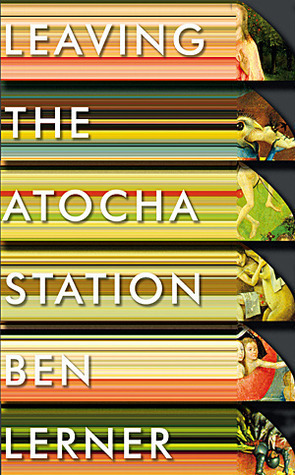
To know reality for what it truly is, it would help to have the experience of living outside of reality for an extended period of time. Leaving the Atocha Station, the novelistic debut of Ben Lerner, published in 2011, offers its own implicit theory of reality in just this way, demarcating reality implicitly by illustrating a very particular kind of surreality that the narrator Adam Gordon has to live in while on a year-long poetry fellowship in Madrid. The project is supposed to culminate in a research-driven poem that is itself about literature, specifically how Spanish literature has responded to the Spanish Civil War. The trouble for Adam is that he has no idea what he is doing, or so he believes. He doesn’t believe his Spanish proficiency is up to the task, seeing as he struggles even with conversational Spanish. He is able to understand snatches of what the locals say to him and so make conversation, but his responses are far from being confident self-expression.
Within the narrator’s gaps in self-expression surreality lurks. Between the narrator’s native English proficiency and his fumbling Spanish proficiency lies a chasm where unintended meanings run riot. And since conversations simply clip along in real time, the narrator is repeatedly left leaving unintended impressions of himself to the people he socializes with. It is a fiasco in impression management, and all throughout his funded time in Spain, Adam feels like a fraud, not only because he lacks confidence in the high-concept poetic project he’s meant to be working on productively, but also because he’s constantly being alienated from his own self-image, a social construct over which he exerts doubtful control.
Alienation is usually experienced as a removal from the reality of intended meanings, but it becomes its own autonomous category of experience, that is, a domain of experience with its own internal logic, when it sees continuation and development. Adam’s social circle of Spanish work associates, friends, and lovers don’t just misinterpret him now and again. His entire identity, the very basis of his inclusion in their social lives, is one big running misinterpretation. This is the surreality that Adam finds himself immersed in, and through this lens of the surreal we see by contrast just how much all of us rely on intended meanings to experience what we can securely call reality–meanings intended not just in what we say about ourselves or other topics, but in living out the plans that are expected of us, that is, life plans that our parents, community, tradition, partners, or even friends would expect us to have. Each of us knows what a normal course of life would look like for someone like ourselves, and this course runs through a particular language, often a particular landscape. Spanish is not English, Spain is not the United States, and Adam on his fellowship in Madrid isn’t Adam but “Adán”. Reality comes into existence by being zoned–according to language, geography, and maybe even particular people. Outside of these zones, experiences can still be had, but they prove obliquely comprehensible, if at all.
Barred from the anglophone comfort zone, helplessly unreliable in self-representation, Adán is no stranger to semantic misadventures. Looking back at the end of his fellowship after having presented his poetic project as a member on a panel of literary types, Adam reaches an alienating conclusion about Adán’s Spanish experiences with poetry, love, drugs, socializing, and parties.
To myself I was saying: You don’t love Teresa and she doesn’t love you. None of this is real. You don’t like Madrid, with its tourists and dust and heat and innumerable Pietàs and terrible food. The fucking fascists. You are ready to quit smoking, to clean up, to return to friends and family. You have outgrown poetry. You will be a legitimate scholar or a lawyer but you are done with Teresa and hash and drinking and lying and lyric and the intersections thereof. I have never been here, I said to myself. You have never seen me.
p. 169
Adam is right. He has never been in Madrid; only Adán has. The two personas even have different parents. Adam’s mother is healthy, and his father is a caring and conscientious modern man. Adán’s mother, however, is quite unwell because Adán has found himself wanting to garner sympathy from his two love interests, Teresa and Isabel. Adán’s father is so terribly authoritative that he is “basically a fascist” because “[h]e only respects violence” (p.82). Adán himself, unlike Adam, is quite the big spender, and when Adán goes overboard at a fancy restaurant in a bid to salvage his floundering relationship with Isabel, Adam can’t help but see the absurd humor in his thick web of foreign-language lies.
When I heard myself ask for a Spanish wine, which, no matter how expensive, would be several orders of magnitude cheaper than the others, I realized I was not entirely out of my mind, which meant I should stop acting as if I were: I was on track to spend more in one day than I’d spent in the previous two months including rent, and all of it in a manner entirely visible to my parents. How would my ailing mom and fascist dad respond to such acting out was the joke I made to myself; I heard my laughter in my head and it sounded foreign.
This split between what Adam and Adán would do in the same situation is what submerges the narrator in surreality. While Adam lives prosaically, or wants to as a “legitimate scholar or a lawyer”, Adán lives poetically; it is tempting then to associate reality with the prosaic and surreality the poetic. This would not be a groundless approach. The Surrealist Manifesto was after all drawn up by a poet in André Breton, and in it Breton, writing after Freud, ascribes to dreams a claim to sovereignty over reality as lived, stating:
Surrealism is based on the belief in the superior reality of certain forms of previously neglected associations, in the omnipotence of dream, in the disinterested play of thought.
p. 26
I suppose our lives would teem with the textures, contours, and figures of a Dalí painting if dreams were omnipotent. Yet, when “[e]xistence is elsewhere” (p. 47), as Breton puts it, it need not be such an overt dreamscape. The existential elsewhere-ness of surreality can present itself as alienation rather than the absurd or the fantastical. To return to this idea of alienation as its own autonomous category of experience, we can observe that what alienates Adam/Adán is something like the loss of semantic control. That is, our narrator has expectations, perhaps naive, of how he should be experiencing different aspects of life. Art, for him and for us, should lead to such and such an experience of profundity, and so should poetry; the passage of time should feel like this; a conversation with amorous intrigue should go like this between two people–and when experiences match expectations, that’s reality, isn’t it? We experience reality when we are semantically in control; when we are deprived of this control for a prolonged period of time, alienation begins to assume the aspect of the surreal.
For Adam/Adán, it’s not just the English-Spanish language barrier that alienates him from reality. Despite being a poet by vocation, at least for the time being, the narrator is nonetheless unable to experience poetry profoundly, except when it is regulated by prose, and even then poetic profundity is not quite felt but approached.
Although I claimed to be a poet, although my supposed talent as a writer had earned me my fellowship in Spain, I tended to find lines of poetry beautiful only when I encountered them quoted in prose, in the essays my professors had assigned in college, where the line breaks were replaced with slashes, so that what was communicated was less a particular poem than the echo of poetic possibility.
p. 7
And so with paintings. Observing a man’s immense tear-filled emotional reactions to canonically valuable paintings like The Garden of Earthly Delights, our narrator is moved by the reaction of the man and the reaction of the museum guards to the man, rather than by the timeless works of art themselves.
There was a certain pathos in the indecision of the guards, guards who spend much of their lives in front of timeless paintings but are only ever asked what time is it, when does the museum close, dónde esta el baño. I could not share the man’s rapture, if that’s what it was, but I found myself moved by the dilemma of the guards: should they ask the man to step into the hall and attempt to ascertain his mental state, no doubt ruining his profound experience, or should they risk letting this potential lunatic loose among the treasures of their culture, no doubt risking, among other things, their jobs? I found their mute performance of these tensions more moving than any Pietà, Deposition, or Annunciation, and I felt like one of their company as we trailed the man from gallery to gallery. Maybe this man is an artist, I thought; what if he doesn’t feel the transports he performs, what if the scenes he produces are intended to force the institution to face its contradiction in the person of these guards. I was thinking something like this as the man concluded another fit of weeping and headed calmly for the museum’s main exit. The guards disbanded with, it seemed to me, less relief than sadness, and I found myself following this man, this great artist, out of the museum and into the preternaturally bright day.
pp. 8-9
This profoundly weeping man that the narrator observes is a great artist of alienating surreality, a deep chasm of surreality that separates the subject from his expectations for art. In the words of the narrator’s own self-assessment, he reveals:
Insofar as I was interested in the arts, I was interested in the disconnect between my experience of actual artworks and the claims made on their behalf; the closest I’d come to having a profound experience of art was probably the experience of this distance, a profound experience of the absence of profundity.
p. 7
Is the narrator being indulgently involute? I don’t think so. The lack of profundity can feel profound. The fall from the firmament of expected sublimity to the featureless landscape of disinterest can give you a rush. Surreality as alienation can furnish its own intensities of experience.
Yet, it bears asking why the narrator would even expect art or poetry to feel profound in the first place. Why is that the reality of how one is supposed to feel? How do we even come to expect certain experiences to feel certain ways? One reason for this must be that when we observe other people having particular experiences, we assume that on the inside they are going through certain corresponding emotions, as their outward behavior would suggest. Adam/Adán sees the man at the museum visibly react to the sight of art; he is weeping and convulsing; naturally, the inference to be made is that the viewer has been moved to such shambles by the sheer pathos of great art. Adam/Adán himself, however, finds such internally felt profundity to be an impossibility for his own ontological makeup. Yet, it is plausible that he might feel one day that way, because others have certainly seemed like they’ve experienced art’s profundity. Art’s profundity is always a plausible impossibility, then, in one’s capacity for experience; it may feel impossible for the person himself to be so unmistakably moved by art, but others seem to be having such experiences all the time, though, admittedly, it is difficult to tell if they are faking it, and whether everyone just tacitly agrees to keep up the charade of having profound internal experiences so as to keep reality from falling apart–because any shared social reality is organized around such plausible impossibilities, such idealistic commonplaces. People fall in love and find their one; your wedding day is supposed to be the happiest day of your life; you have a baby, the little one grabs your finger with their whole fist, and you are a changed person forever because you’ve been transformed into a self-sacrificing parent; convert to a new religion and you soar into this whole other world of metaphysical and spiritual fulfillment. Do these things…happen? They certainly seem to; and who’s to say they don’t? It’s exponentially impossible, after all, to inspect the internal experiences of everyone who’s ever existed for profundity or the lack thereof.
Trafficking in ideal commonplaces, our everyday sense of reality relies on an appearance-reality distinction—but in this division, unlike the standard philosophical one, it’s appearance which gets idealized, that is, as profundity, and a person’s interiority has to take the impeccable appearance of how significant experiences transpire as a moral guide and align itself accordingly—or risk psychic isolation. These conventional images of idealized experiences orient us like North Stars; they stop us from sailing into the storm of surreality, from entertaining the thought that at heart we have nothing in common with the next person, as Adam/Adán feels during his time in Spain despite the work relationships, friendships, and romantic relationships he forms.
It can even be argued that any narrative, even one operating with the discipline of literary realism, idealizes experience, just by mere virtue of the fact that narratives rely on words, and words represent experiences by capture. Order gets imposed in the linguistic mode of representation; the quiddity of experience is forced to submit to the semantic control exerted by the divisive and sorting functions of language. And what language can’t put into order, language can’t represent. In this way, raw experience is tamed by the ideals of order that populate a language. As our narrator thinks back on those rainy December afternoons in Spain passed by reading novels, he meditates on the immiscibility between language and certain subtly life-defining experiences, that is, such experiences that are fluidly continuous with one another and hence slippery to the grasp of language.
These periods of rain or periods between rains in which I was smoking and reading Tolstoy would be, I knew, impossible to narrate, and that impossibility entered the experience: the particular texture of my loneliness derived in part from my sense that I could only share it, could only describe it, as pure transition, a slow dissolve between scenes, as boredom, my project’s uneventful third phase, possessed of no intrinsic content. But this account ascribed the period a sense of directionality, however slight or slow, made it a vector between events, when in fact the period was dilated, detached, strangely self-sufficient, but that’s not really right.
During this period all like periods of my life were called forth to form a continuum, or at least a constellation, and so, far from forming the bland connective tissue between more eventful times, those times themselves became mere ligaments. Not the little lyric miracles and luminous branching injuries, but the other thing, whatever it was, was life, and was falsified by any way of talking or writing or thinking that emphasized sharply localized occurrences in time. But this was true only for the duration of one of these seemingly durationless periods; figure and ground could be reversed, and when one was in the midst of some new intensity, kiss or concussion, one was suddenly composed exclusively of such moments, burning always with this hard, gemlike flame.
But such moments were equally impossible to represent precisely because they were ready-made literature, because the ease with which they could be represented entered and cancelled the experience: where life was supposed to be its most immediate, when the present managed to differentiate itself with violence, life was at its most generic, following the rules of Aristotle, and one did not make contact with the real, but performed such contact for an imagined audience.
This is what I felt, if it wasn’t what I thought, as I smoked and listened to the rain on the roof and turned the pages and smelled the wet stone smell of Madrid through the windows I kept cracked. And when I read the New York Times online, where it was always the deadliest day since the invasion began, I wondered if the incommensurability of language and experience was new, if my experience of my experience issued from a damaged life of pornography and privilege, if there were happy ages when the starry sky was the map of all possible paths, or if this division of experience into what could not be named and what could not be lived just was experience, for all people for all time. Either way, I promised myself, I would never write a novel.
pp. 60-62
The surreality the narrator faces is twofold. On one end of the spectrum are fluid experiences that defy linguistic representation and so feel unreal; on the other are experiences that are too generically representable, such as those marked by violence or erotic passion, and these feel surreal when they happen because one is so conscious of their narrative value that one can’t help but perform the significance of the moment for an imagined audience. And so for the narrator, surreality is a double-bind: experiences feel surreal when they are not linguistically ordered through representation, but, conversely, experiences also feel surreal when narrated, or even when they just lend themselves to narration, because then all the conventionally expected emotions are invoked, their background presence threatening authenticity. (But how is one to tell what authenticity is, when reality proves this difficult to define?)
For the narrator, reality is not at all something that is just there for the swimming in, it seems. Rather, it’s something that only exists when experiences happen under particular conditions of semantic control as exercised through the use of language. These are experiences that do not fit hand-in-glove into narrative molds, but neither do they belong to the various flow states of consciousness, as with fantasy, intoxication, or absorption into a skill-intensive task. What these experiences are, are the banal: the everyday completion-oriented moments of life that we plan for and maneuver through, as we use our language abilities, mostly in social ways, to predict, influence, and coordinate actions and outcomes.
Reality, then, might not be hard to find, being banality itself. Yet to follow along with the narrator’s Spanish experiences in Leaving the Atocha Station is to raise doubt as to whether we’re ever outside of the surreal…what we call reality, might it not just be a tiny bubble in an ocean of surreality? We may not wish to let the surreal in, but we can’t deny that it engulfs us; the variety of experiences that elude the staid semantic control we are able to exert with our utilitarian usages of language are legion and everywhere to be had; our consciousness flows more often than not, and received narratives haunt us in echoes and half-intelligible voices to sway how we think and feel and choose. We slip outside of the bubble of reality and back in so subtly we may not even notice it, believing our worldview to have been dry the whole time.
No matter which language we bank on, buttressed by the assurances of native proficiency, something foreign always flits about in our self-understanding, because reality itself, ever the historically shaped linguistic construct, is native to no one. If this foreign aspect of one’s self-understanding were to be discerned with anything like accuracy, it would have to be, surely, an artist of surreality who’s capable of such keen vision. Though Adam/Adán may bow down reverentially to the weeping man at the museum, he’s certainly no slouch as an artist of surreality himself; he knows himself well enough to understand that there’s no real version of him to know except for what a familiar language authorizes.
Works Cited
Lerner, Ben. Leaving the Atocha Station: A Novel. United States, Coffee House Press, 2011.
Breton, André. Manifestoes of Surrealism. United States, University of Michigan Press, 1969.
 Musings of an Educator, Writer, & Lifelong Learner
Leave a comment